Salt air and your AC: beach side vs Crestview
On the beach side, from Okaloosa Island and Destin out to 30A, salt settles on the outdoor coil and slowly corrodes the fins and copper tubing, which is one way refrigerant leaks start. Rinse the coil with a garden hose every month or two, ask about a coated coil when you replace, and put the unit where it doesn't take direct spray. Up in Crestview and Baker the bigger load on an AC is afternoon heat.
On this page
Two climates in one metro
Okaloosa and Walton stretch from the Gulf to the Alabama line, and an AC on the beach lives a different life from one in Crestview. Our comparison of the two NOAA stations (2016 to 2025) shows it. Crestview's Bob Sikes Airport logs 108 days a year at 90°F or hotter, against 71 at the Destin-Fort Walton Beach Airport. The July average high is 93°F inland and 91°F on the coast.
The nights flip it. The coast logs 106 nights a year with a low of 75°F or warmer, against 10 in Crestview, and the July average low is 78°F on the coast against 72°F inland. So an inland system works hardest in the afternoon and gets a breather overnight. A beach system rarely gets a night off, and it does all that running with salt on the coil.
Inland vs coast, yearly average, 2016 to 2025
Crestview gets the hot afternoons; the coast gets the hot nights. Source: NOAA NCEI daily summaries, stations USW00013884 and USW00053853, 2016 to 2025.
What salt does to an AC
Wind off the Gulf carries salt, and it settles on anything outside. On an AC it lands on the outdoor coil and holds moisture there, which keeps the corrosion going between rains. Four parts take the damage:
- The fins. They are thin aluminum. Corroded fins flake and crumble, the coil moves less heat, and the system runs longer to do the same job.
- The copper tubing and joints. Corrosion here is how small refrigerant leaks start. A system that needs refrigerant every summer has a leak, and on the beach the coil is the first place I'd want checked.
- The cabinet and fasteners. Rust on the panels and screws is mostly cosmetic until it reaches the base pan or makes the panels hard to remove for service.
- The electrical parts in the outdoor unit. Contactors and terminals corrode too, which can mean a unit that won't start.
I don't have a reliable figure for how much sooner a coil fails on the beach than inland, and I wouldn't trust anyone who quotes one without a source. It depends on how close the unit is to the water, which way it faces and how often it gets rinsed.
A leak repair is a normal repair, priced like one. Fixr puts most AC repairs at $250 to $700, and a failed compressor at $600 to $3,000. If you are told an R-410A system "can't be repaired anymore," that is wrong. EPA rules limit the refrigerant in new systems, but existing R-410A systems can still be serviced and repaired. The detail is in Florida AC rules for 2026. This Old House puts the typical life of a home cooling system at 12 to 15 years. If a beach-side system is near that age and the coil is leaking, I'd get a replacement quote before paying for a coil. Our repair or replace guide covers the math.
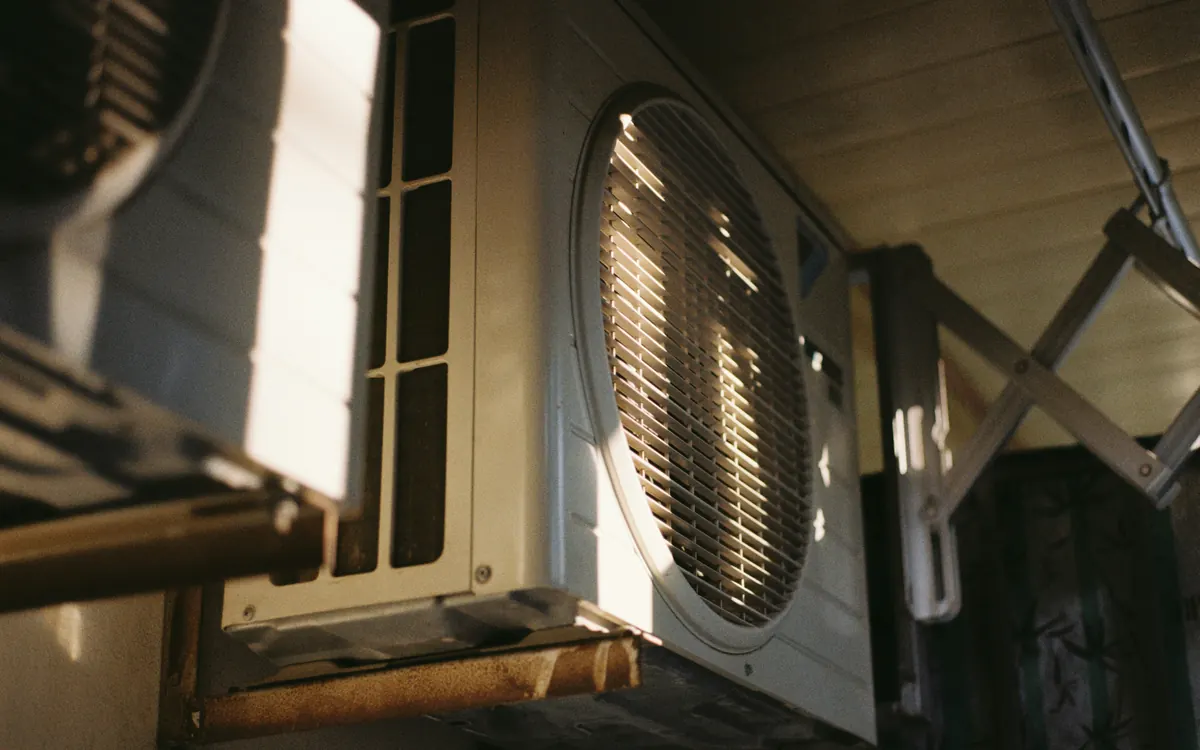
Rinsing the coil
A gentle rinse with a garden hose is the cheapest protection there is. Anywhere on the Gulf front, including the island and Destin, I'd do it every month or two, and after any storm that blew spray inland.
- Turn the power off at the outdoor disconnect or the breaker first.
- Spray gently. Never use a pressure washer; it flattens the fins.
- Rinse from the inside of the unit outward if you can get to it, so you push salt and dirt out instead of in.
- Clear sand and leaves from around the base so water drains.
A deeper cleaning with a coil cleaner is a reasonable once-a-year add-on for a home near the water. Ask what product the technician uses and whether it is rinsed off. Our maintenance page covers what a visit should include.
Replacing a unit near the water
If you are replacing a system on Okaloosa Island, in Destin, in Miramar Beach or along 30A, there are three things to raise before you sign.
- A coated coil. Some outdoor coils come with a protective coating from the factory, and coatings can also be applied after. Ask whether the quoted unit has one, what it costs as a separate line, and what the company recommends for your exposure.
- Placement. A unit on the side of the house facing the Gulf takes the spray head on. If there is room on the sheltered side, ask whether moving it is practical, while keeping the clearance the unit needs for airflow.
- Height. On low ground or near the bay, ask whether the unit should sit on a raised stand, and whether the building department for your address requires it.
Two quotes for "the same" system can differ on exactly these items, so ask for each one in writing. Our quote guide walks through comparing them.
Crestview and Baker: a different problem
Inland, up I-10 in Crestview or out in Baker, salt on the coil is rarely the concern. The outdoor coil still gets dirty from grass clippings and pollen, so the same gentle rinse helps, but the bigger load is heat. Those 108 days at 90°F or hotter mean long afternoon run times, and that wears on capacitors and compressors. Inland homes also use their heat more: Crestview has the colder winter nights, with a January average low of 38°F against 47°F on the coast. Our AC repair page covers what usually fails here.
Homes on Choctawhatchee Bay and Santa Rosa Sound sit on salt water too, and so do homes on Boggy Bayou in Niceville. If you can see the water from the yard, treat the unit like a beach unit.
After a storm
Hurricane Isaias came ashore near Destin around 8:30 p.m. CDT on October 9, 2026, as a Category 2 hurricane with maximum sustained winds of 105 mph. A storm like that drives salt spray and sand well past where it normally reaches. Once the power is safe, look at the outdoor unit: bent or packed fins, debris inside the cabinet, a unit knocked off level, oily spots at the copper joints (a sign of a refrigerant leak). Then rinse it. If water reached the unit, read our guide to your AC after a hurricane or flood before turning it on.
Questions Crestview-area homeowners ask
Does salt air damage AC units in Destin and on Okaloosa Island?
Yes. Salt settles on the outdoor coil and holds moisture there, which corrodes the aluminum fins and copper tubing over time. Corroded tubing is one way refrigerant leaks start.
How often should I rinse my AC coil near the beach?
I'd rinse it gently with a garden hose every month or two on the Gulf front, and after any storm, with the power off at the disconnect or breaker. Never use a pressure washer, which flattens the fins.
Is a coated coil worth it near the water?
Ask about it when you replace a system near the Gulf or the bay. Get the coating priced as a separate line on the quote so you can compare it across companies and decide for your exposure.
Do I need to worry about salt air in Crestview?
Usually not. Inland, the bigger load on an AC is heat: Crestview logs 108 days a year at 90°F or hotter. Homes on Choctawhatchee Bay and Santa Rosa Sound are a different story and should be treated like beach homes.
Sources
- NOAA NCEI daily summaries, Crestview Bob Sikes Airport (USW00013884)
- NOAA NCEI daily summaries, Destin-Fort Walton Beach Airport (USW00053853)
- Fixr: AC Repair Cost in 2026 (updated January 29, 2026)
- This Old House: Air Conditioner Repair Cost, 2026 Pricing (updated March 16, 2026)
- US EPA: Technology Transitions HFC Restrictions by Sector (updated August 28, 2026)
- National Weather Service Mobile/Pensacola: Post Tropical Cyclone Report, Hurricane Isaias (updated October 13, 2026)